Rewired
Overview
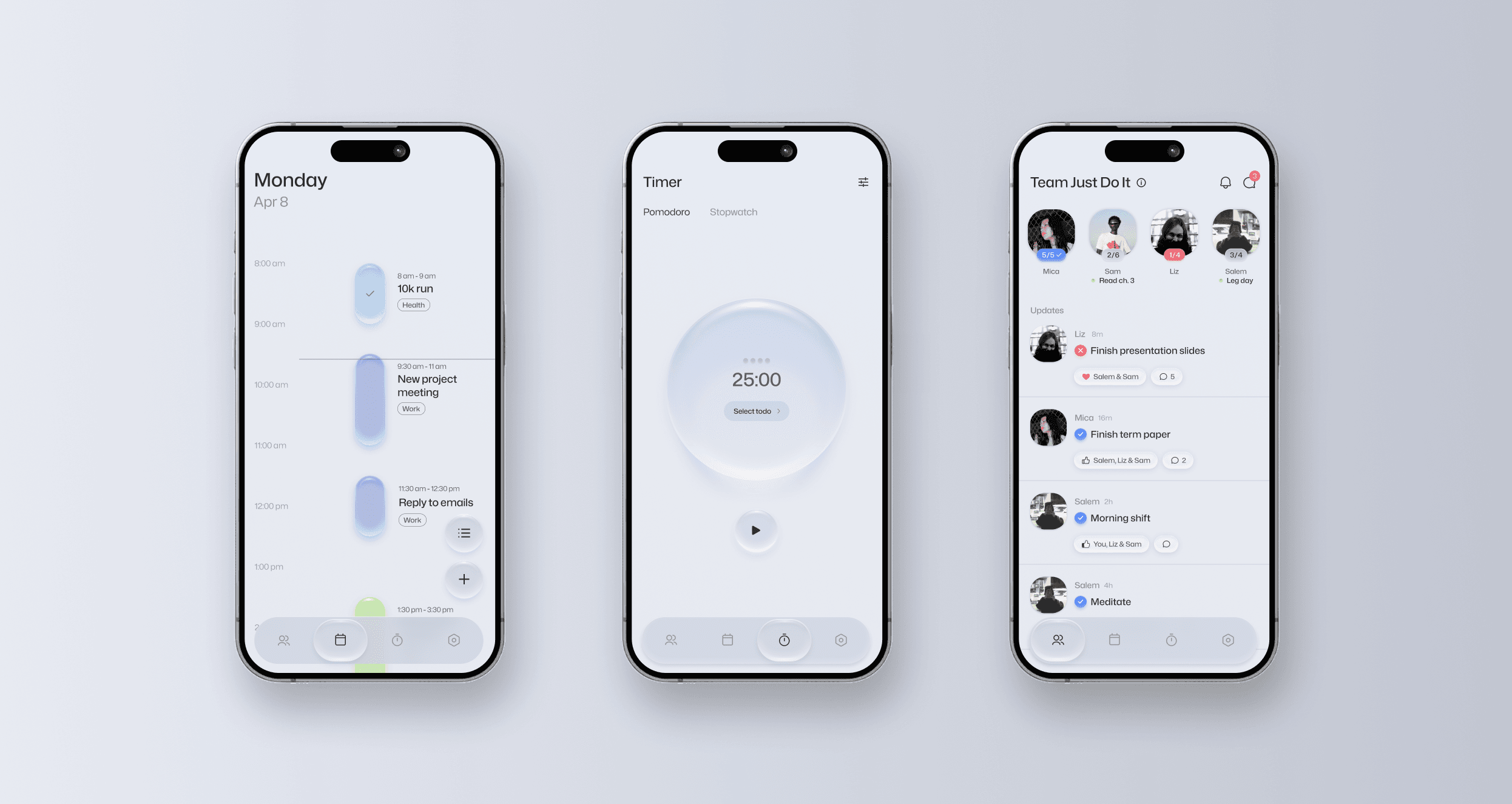
Rewired is a mobile app where users join accountability groups and help each other complete their daily tasks.
I was the sole product designer for the development of the Rewired app, designed end-to-end from conception to the final developer handoff.
The problem
Many people set out with good intentions, but struggle to follow through.
We’ve all experienced moments like this. But for some, procrastination becomes a persistent barrier to their personal growth. Our team started off with this general observation and explored the gap between intention and action.
Jump to solution
↓
Research
Procrastination is not simply laziness.
To explore this problem space, I started off with a literature review.
Research shows people avoid tasks as a way to manage the negative emotions associated with a task. This could be due to a fear of failure, task difficulty, not knowing what to do, anxiety, etc.
It's not about putting things off
The role of social accountability
External pressure from work, school, or others was consistently mentioned as a key motivator to helping participants stay on track.
A negative cycle
Failing to follow through on intentions triggers guilt and shame for procrastinators, trapping people in a negative cycle of procrastination.
An opportunity in the market?
Naturally, we wanted to see which solutions already exist to close the intention to action gap.
The market was saturated with tools for task management (checklists, timers, and habit trackers), but few solutions directly addressed the challenge of procrastination.
We were particularly interested to see any solutions that leverage social accountability to drive action, but surprisingly, there was little to none.




How might we help people overcome procrastination by
creating supportive social accountability that keeps them on track?
Defining the scope
Small accountability groups with daily tasks
I worked together with our team to explore a wide range of directions, from gamification, high-stakes punishments (betting money, for example), shared commitments, to live work sessions. We had to narrow our scope for product clarity and technical feasibility.
We decided on small accountability groups of 4 where users commit to daily tasks, share progress, and support each other.
Several factors guided this decision:
Daily rhythm builds consistency
Focusing on daily tasks is a digestible commitment that can help people make steady progress and develop consistent habits over time.
Positive social motivation
Supportive relationships provide positive accountability, whereas competitive approaches like leaderboards and high stake penalties could worsen guilt and shame.
Groups reduce pressure
One-on-one accountability partnerships easily fail due to inconsistent check-ins, but groups reduce this dependency. Group sizes of 4 can create a community of accountability without being too overwhelming.
Solution Design
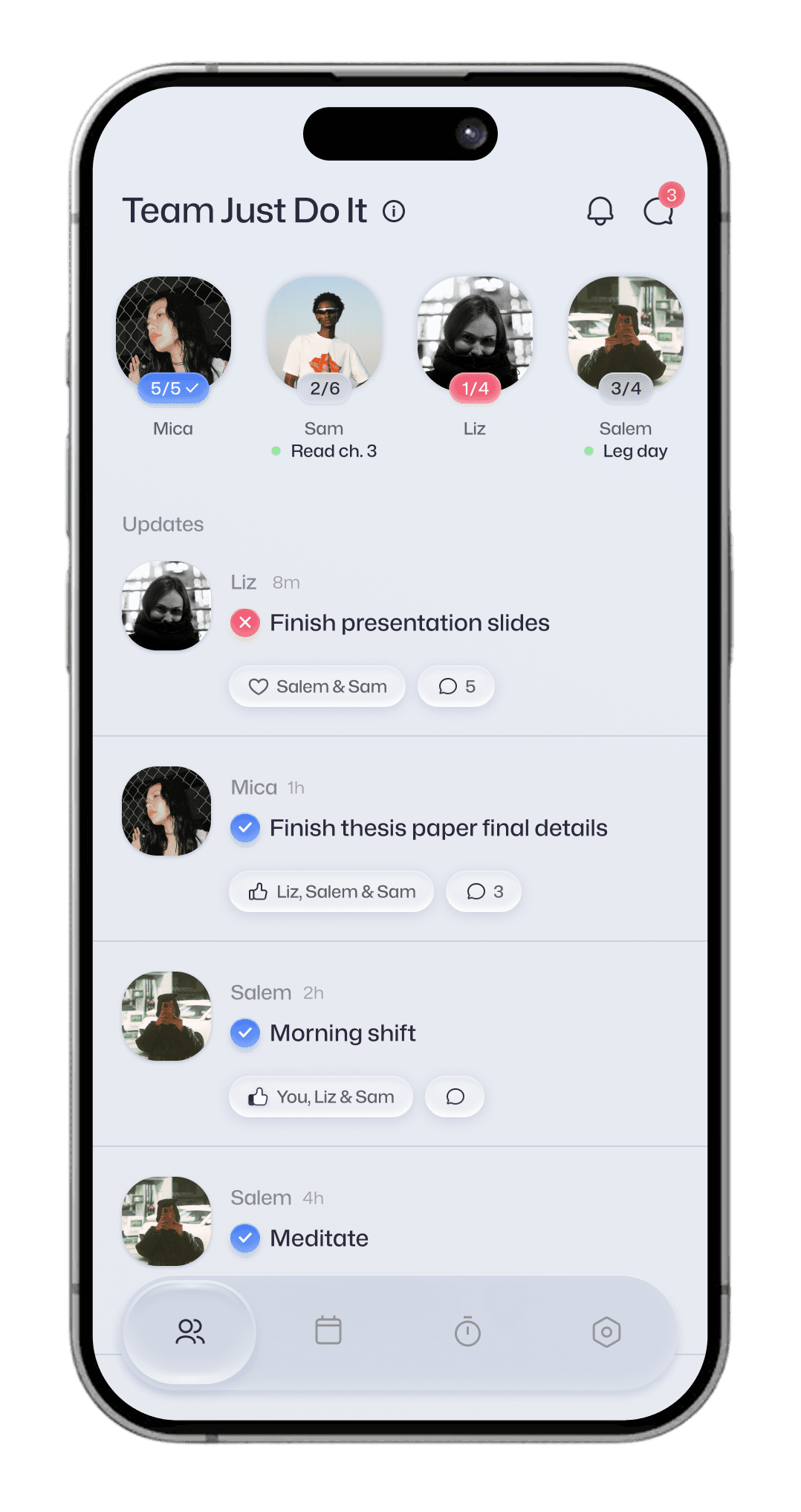
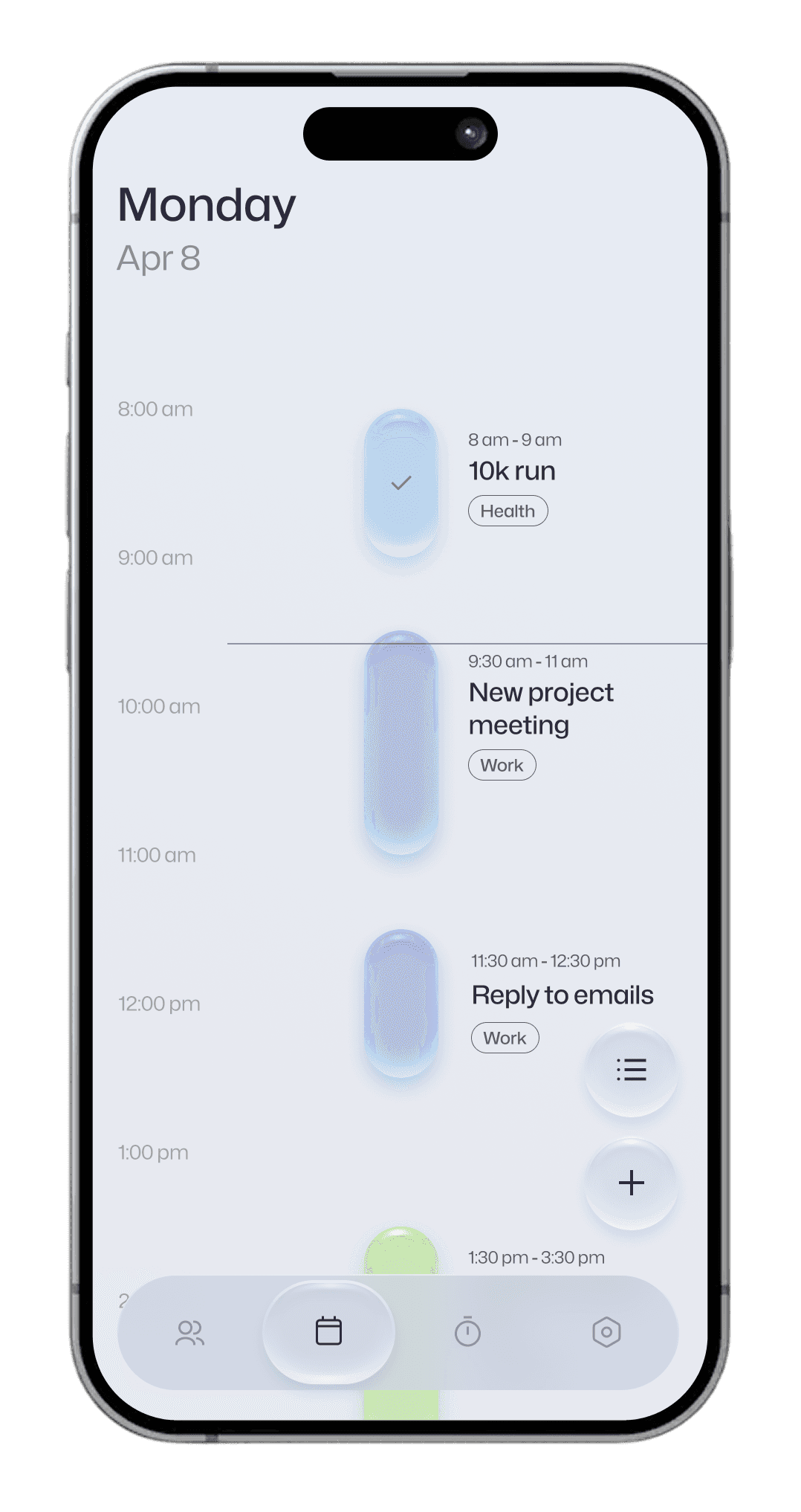
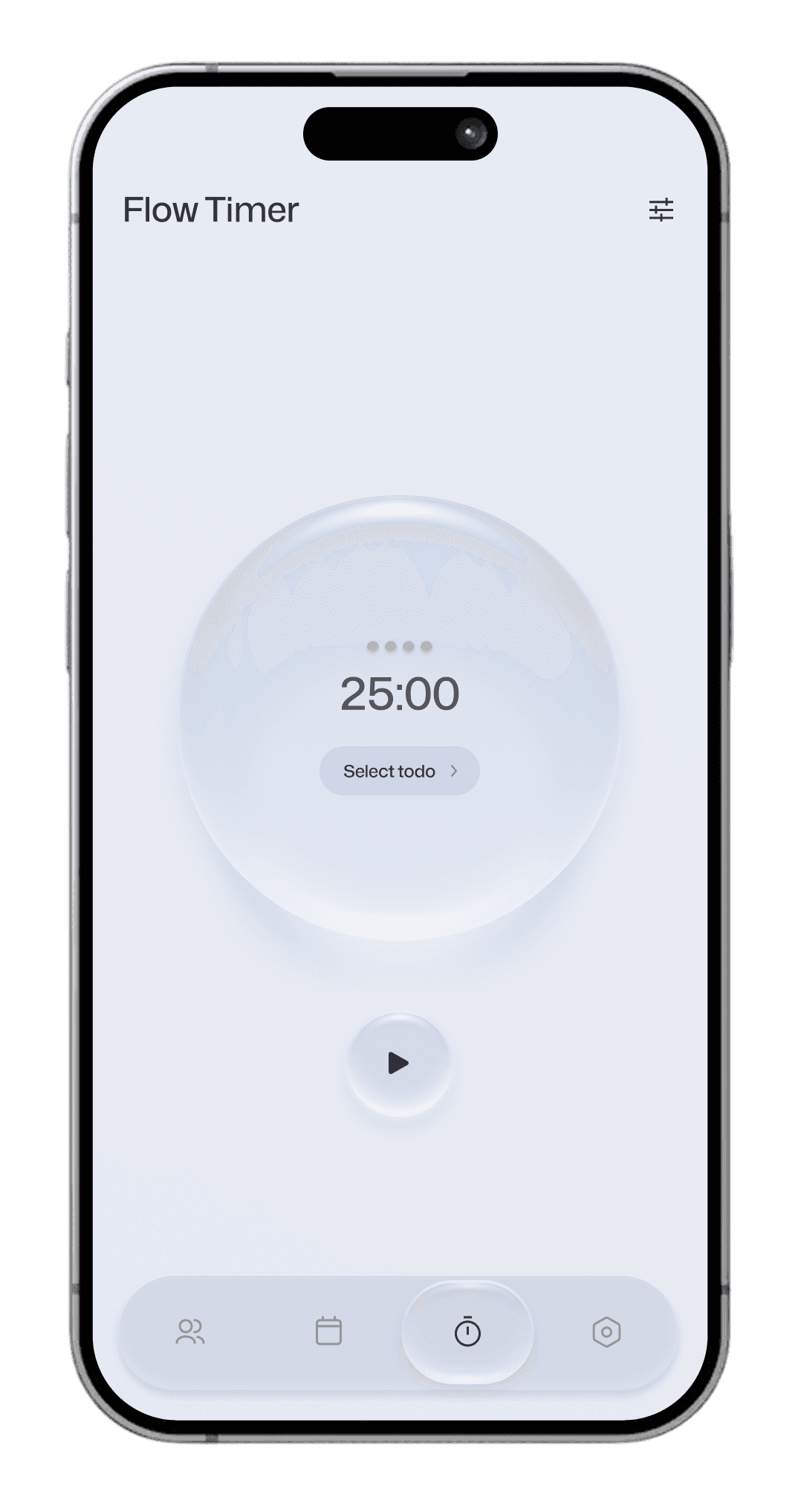
We identified a set of core features combining social accountability with tools for task execution, that make daily tasks easier to manage and complete.
Shared Group Progress
Manage daily tasks
Focus Timer
Reflection
Things didn't go to plan
We aimed to release a lean product but kept adding features before launch out of eagerness. What felt like progress soon slowed us down, delaying testing. I saw how easily scope can creep up and derail timelines.
Although we realized a bit late, we focused our energy on building the app with what we had, while further developing other parts of our product such as marketing and branding.
Next steps
Our next steps are to validate our approach and polish any usability issues through user testing.
The priority lies in measuring whether users are following through on their tasks — daily. Are users able to translate their intentions into actions?
What I've learned
Adaptability in the design cycle
The reality of the design process was far less linear than 'textbook' frameworks. I learned to prioritize adaptability—tailoring our workflow to fit the team's specific constraints and needs, rather than forcing to fit the process.
Thinking bigger
It was tempting to perfect each feature in isolation. However, by maintaining a holistic view, I was able to ensure that each feature amplified other features, resulting in a cohesive experience rather than a collection of disjointed tools.
Not getting attached to ideas
Very early into the project, I found myself becoming protective of designs because I had invested hours. When I detached myself from my work, I stopped defending 'my' designs and started objectively choosing the best options for the product.